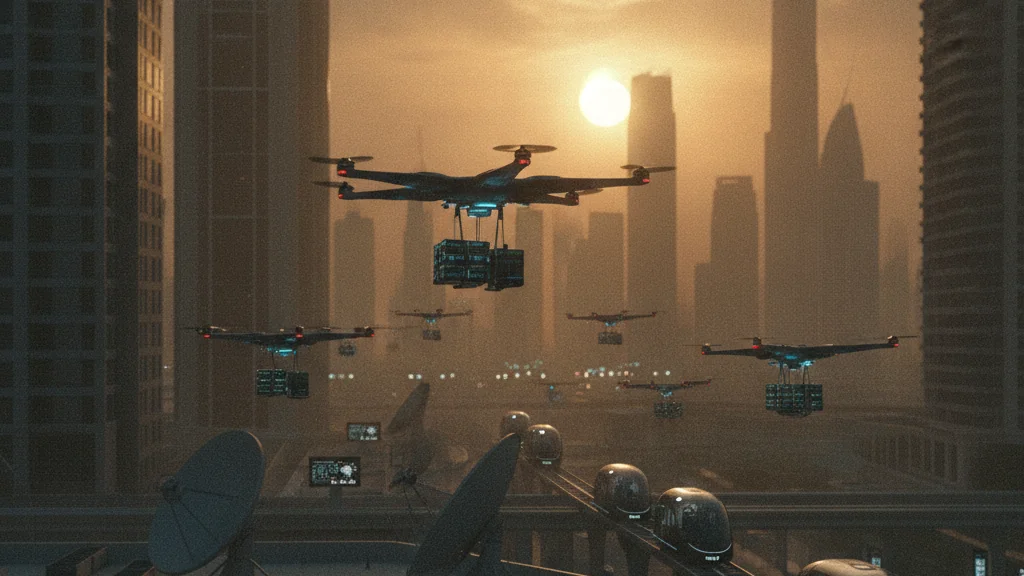
The Sora API sunset: how Dubai production houses migrate to Gen-4.5, Veo 3, and Ray3 by September 24, 2026
The countdown has begun for Dubai’s dynamic production sector. OpenAI’s decision to sunset the Sora API by September 24, 2026, marks a significant pivot for agencies and in-house creative teams across the UAE. While Sora captivated the industry with its potential, its API’s discontinuation means production houses, particularly those serving clients in DIFC, Business Bay, and Dubai Marina, must now strategically migrate their workflows to alternative, reliable AI video generation platforms. This shift isn't just about finding a replacement; it's about integrating advanced AI tools like RunwayML’s Gen-4.5, Google DeepMind’s Veo 3, and Luma AI’s Ray3 into existing pipelines to maintain a competitive edge and deliver high-quality content.
The immediate impact for Dubai's creative sector
Sora’s promise of high-fidelity, long-form video generation from text or image prompts offered a tantalizing glimpse into the future of AI video production Dubai. For production houses in Dubai Media City (DMC), the ability to rapidly prototype concepts for luxury automotive brands or generate virtual staging for off-plan real estate in Jumeirah was a major draw. However, the API sunset necessitates a proactive strategy. Waiting until 2026 is not an option; savvy studios are already evaluating and integrating new platforms to ensure business continuity and minimize disruption. This includes re-evaluating licensing rights for AI-generated assets, understanding the nuances of each platform's output, and training teams on new interfaces.
Gen-4.5 vs the Sora API sunset: RunwayML's evolution for Dubai brand marketers
RunwayML has been a staple in AI video generation, and its Gen-4.5 iteration represents a significant leap. For brand marketers and agency owners in Downtown Dubai or Al Quoz, Gen-4.5 offers enhanced control over camera movements, improved consistency in character generation, and longer clip durations, making it ideal for corporate explainer videos for DIFC fintechs or social media campaigns for retail brands at Expo City. While Sora Pro was projected to cost around $200/month, Runway Gen-4.5 offers tiered pricing starting from $15/month for basic plans up to $76/month for their Pro plan, making it an accessible option for many Dubai SMEs. The ability to fine-tune models with custom datasets is also proving invaluable for maintaining brand consistency, a critical factor for clients with stringent brand guidelines. Instead of a 3-day traditional studio shoot in Al Quoz costing AED 35,000-60,000, Gen-4.5 can generate multiple short-form variants for a fraction of the cost and time — for a side-by-side breakdown, see our AI video vs traditional shoot cost in Dubai comparison.
Veo 3 after the Sora API sunset: Google DeepMind's high-fidelity push
Google DeepMind’s Veo 3 is emerging as another strong contender. With Google’s vast computational resources, Veo 3 promises high-resolution, photorealistic video generation with a focus on detailed scene understanding and complex motion. For production teams working on high-stakes projects, such as architectural visualizations for new developments in Dubai Marina or cinematic sequences for hospitality and tourism campaigns across the region, Veo 3’s capabilities could prove invaluable. Its integration with Google's broader AI ecosystem also suggests potential for advanced text-to-video generation, where scripts can be directly translated into visually rich narratives. While specific pricing for Veo 3 is yet to be fully disclosed, its expected feature set suggests it will compete directly with the high-end capabilities Sora aimed to deliver, making it a serious consideration for studios looking to push creative boundaries.
Ray3 and the Sora API sunset: Luma AI's 3D and spatial video focus
Luma AI’s Ray3 brings a distinct advantage, particularly for studios specializing in 3D and spatial video. Ray3's strength lies in its ability to generate high-quality 3D assets and environments directly from prompts, which can then be animated. This is a game-changer for virtual production studios in Dubai looking to create immersive experiences for the Museum of the Future or interactive installations for the Burj Khalifa. The integration of AI-generated 3D elements can significantly reduce the need for extensive traditional 3D modeling, accelerating pre-production and reducing costs for projects that require complex CGI & VFX. For projects involving AI virtual staging for Dubai Marina off-plan real estate, Ray3 offers a powerful toolkit. This complements services like 360 VR video production, allowing for more dynamic and realistic virtual environments.
Integrating new AI tools into Dubai's production pipelines
The migration isn't just about selecting a new tool; it's about re-architecting production pipelines. Studios in Dubai are increasingly combining these AI video generation platforms with other AI-powered tools such as ElevenLabs for AI-generated Arabic voiceovers for bilingual campaigns, Topaz Video AI for upscaling, and DaVinci Neural Engine for intelligent color grading. The goal is to create a hybrid workflow where AI handles repetitive or computationally intensive tasks, freeing human creatives to focus on storytelling, artistic direction, and nuanced post-production. This also includes navigating DCAA permits for drone videography in specific no-fly zones, even when AI-generated footage is combined with live-action drone videography Dubai. For a deeper look at how Unreal Engine and Gen-5 are reshaping that hybrid model, see our hybrid virtual production in Dubai studios guide. For instance, an AI-generated scene of a futuristic cityscape can be seamlessly integrated with live footage of the Burj Khalifa, followed by AI-driven color correction and motion graphics design.
The strategic value of the post-sunset era is in-house IP control: studios that combine AI-driven content creation with their own UAE-based talent protect client confidentiality, iterate faster on brand campaigns, and avoid the licensing ambiguity that comes with cloud-only tools. While tools like Runway Gen and Veo 3 handle the initial video generation, human expertise remains paramount for refining the narrative, ensuring brand safety, and adding the distinctive creative flair that Dubai's clients demand. The deadline of September 24, 2026, is approaching fast, and proactive studios are already embracing this new era of AI-powered video production.