Luma Uni-1 for Dubai real estate walkthroughs: 4K AI property videos vs a traditional off-plan shoot in 2026
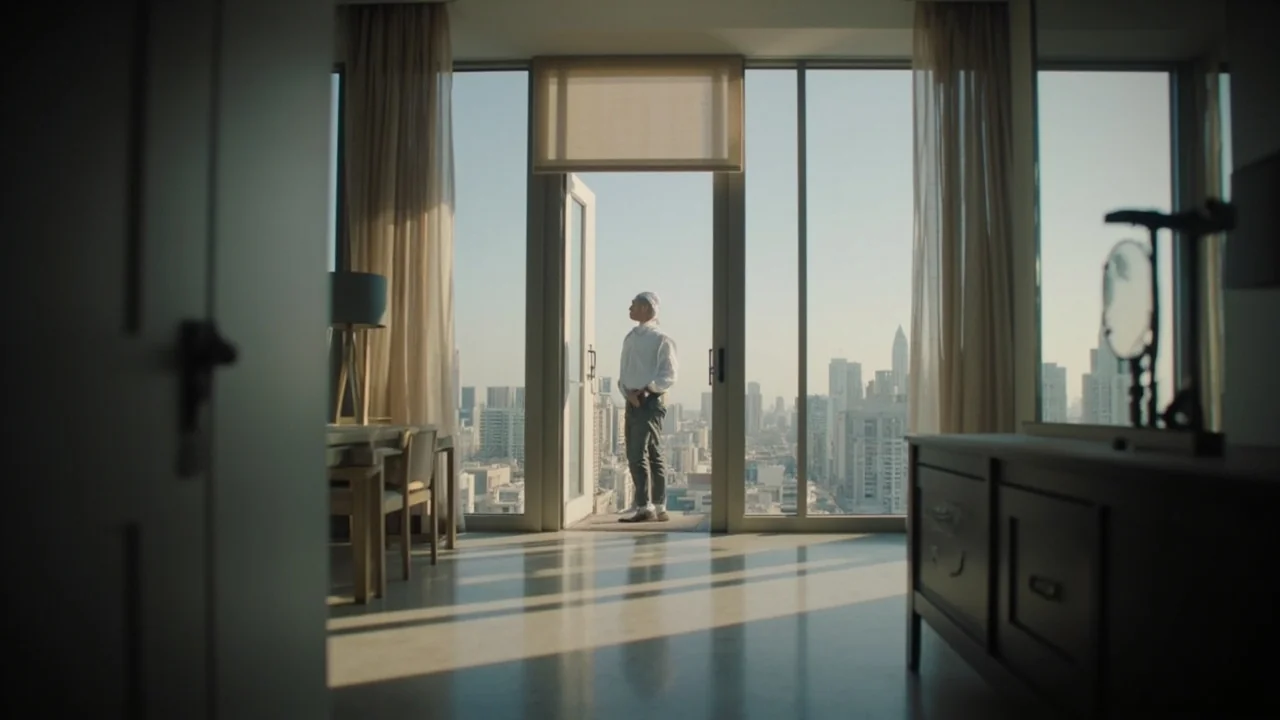
A Dubai off-plan launch rarely has time for a slow production cycle. The sales team may need a credible walkthrough before the development is finished, while the marketing team still wants to test several versions of the same apartment. Luma Uni-1 can turn approved architectural references and interior visuals into 4K motion sequences, giving the team something reviewable in days rather than weeks. The decision is not whether AI can replace a camera. It is where speed matters more than documentary accuracy, and where a physical shoot still protects the credibility of a high-value property campaign.
For a Business Bay launch, one version might focus on an evening city view while another opens into a bright morning interior. A team can produce both directions for social media, sales presentations and investor updates before the development reaches handover. JBR campaigns can shift the mood from relaxed waterfront living to a polished tower residence without rebuilding the entire virtual set. The same process works for Deira redevelopment concepts, where clients may need several visual options quickly.
The related comparison of Wan 2.5 and Veo 3.1 for Arabic video ads explains how different models affect motion, typography and cost. The comparison of Sora 2, Runway, Luma Uni-1 and Pixverse also maps where each model sits in a Dubai production workflow. For property content, those differences matter, but source accuracy and architectural continuity matter more. A slightly imperfect generated frame is unacceptable when it changes a window position, room dimension or view direction.
Where 4K AI walkthroughs outperform traditional shoots
The clearest advantage is speed to market. A traditional off-plan production can require several weeks for visualisation, location preparation, shooting, rendering and revisions. A focused Luma Uni-1 pilot can begin with a reference pack and deliver reviewable 4K sequences within days, depending on asset readiness and the number of revisions. This gives sales teams something to react to while the development marketing is still developing.
Cost control is the second advantage. An indicative AI-assisted property package may sit around AED 3,500 to AED 10,000, while a conventional shoot, 3D visualisation and post-production package can begin near AED 18,000 and reach AED 45,000 or more. Traditional costs increase when the location needs security access, furniture, makeup, drone permissions, multilingual voice talent or several camera units. AI production also reduces disruption at occupied locations, which matters for premium stock in Dubai Marina or Jumeirah.
Iteration makes the format attractive for performance marketing. Agencies can create different openings, music beds and calls to action for leads moving from Instagram to a sales funnel. A team based around Dubai Media City, Studio City, Sharjah Media City or the Media City Free Zone can use that agility across real estate, hospitality, retail and tourism clients. The result is not merely a cheaper video. It is more useful creative testing before money is spent on a national campaign.
Where a traditional Dubai property shoot still wins
Physical capture remains more dependable for completed properties. It records the actual marble finish, ceiling height, kitchen fittings, daylight direction and view from each balcony. A buyer watching a walkthrough of a Jumeirah villa expects documentary accuracy, especially after paying a significant amount for an off-plan unit. AI can reproduce the intended design, but the project may still change during construction.
Traditional crews also handle complex movement better. Stabilised tracking through a narrow corridor, a real gimbal move around a kitchen island and natural interaction with glass create a sense of place that generated footage often struggles to match. Reflections, people, vegetation, moving traffic and changing sunlight can expose synthetic details. The closer the shot resembles conventional property journalism, the more a real shoot justifies its cost.
For high-profile launches, a physical production can capture recognisable Dubai context: the Burj Khalifa view from Downtown, the architecture around Museum of the Future, footage near Coca-Cola Arena or the wider Expo City setting. These references ground a development in its location. AI can add such views later, but a controlled capture with the right lenses and motion control may produce more convincing perspective shifts.
A practical hybrid approach is often best. Shoot the hero interiors, key exterior angles and genuine lifestyle footage on location, then use Luma Uni-1 to extend coverage, create alternative openings or produce social cutdowns. Clients who need that broader package can review the video production services offered by JJ Agency Films, while AI remains one stage in the workflow.
Luma Uni-1 walkthrough costs for Dubai projects: AI efficiency versus physical control
Budget should reflect the purpose of the film. A pre-launch teaser needs impact, speed and frequent revisions. An investor update needs stable information. A handover film needs proof of quality. Comparing every asset by a single “AED per minute” figure hides these differences, so production teams should quote by deliverable and usage.
A useful AI package might include reference preparation, a 4K hero sequence, two or three vertical adaptations, licensed sound, captions and one revision round. Expect an indicative range of AED 4,000 to AED 12,000. A physical off-plan shoot may reach AED 20,000 to AED 60,000 once the set, technical crew, furniture, drone work, render integration and multiple edits are included. Hybrid packages usually cost more than AI alone but less than producing every asset conventionally.
RERA-published listing information should remain the factual baseline for unit sizes, amenities and project details. AI can help visualise the story around that information, but it should not invent an unbuilt feature or alter a stated layout. Buyers are more likely to remember a clear explanation of the property than a polished scene containing a questionable architectural detail.
The 2026 production decision for Dubai agencies
Choose Luma Uni-1 when the goal is rapid concept testing, early investor communication, social-first content or a future-facing visualisation of an unbuilt project. The ideal brief has strong reference images, a controlled environment and human review built into every output. Dubai Marina apartments, Business Bay offices and Deira retail concepts can benefit when several campaign versions are required before the sales team locks its message.
Choose a traditional shoot when the footage must prove the physical reality of a completed home, when clients require premium camera movement or when the final film will represent the developer’s reputation over several years. For an Al Quoz warehouse or a flagship tower in DIFC, that distinction between concept and proof can determine the right budget.
Many production teams will use a staged decision. Begin with a small Luma Uni-1 test, review continuity and commercial value, then fund physical capture only for the scenes that require it. Creative teams working near DMC can also connect the property film with broader campaign systems, including virtual production with LED volumes in Dubai.
The wider direction of AI video is covered in Variety’s AI technology coverage, which is useful context for production teams evaluating how generative tools are changing commercial media. For Dubai property marketing in 2026, the best result is not an AI-versus-camera argument. It is a controlled workflow where AI handles speed and variation, while physical production protects accuracy and trust.