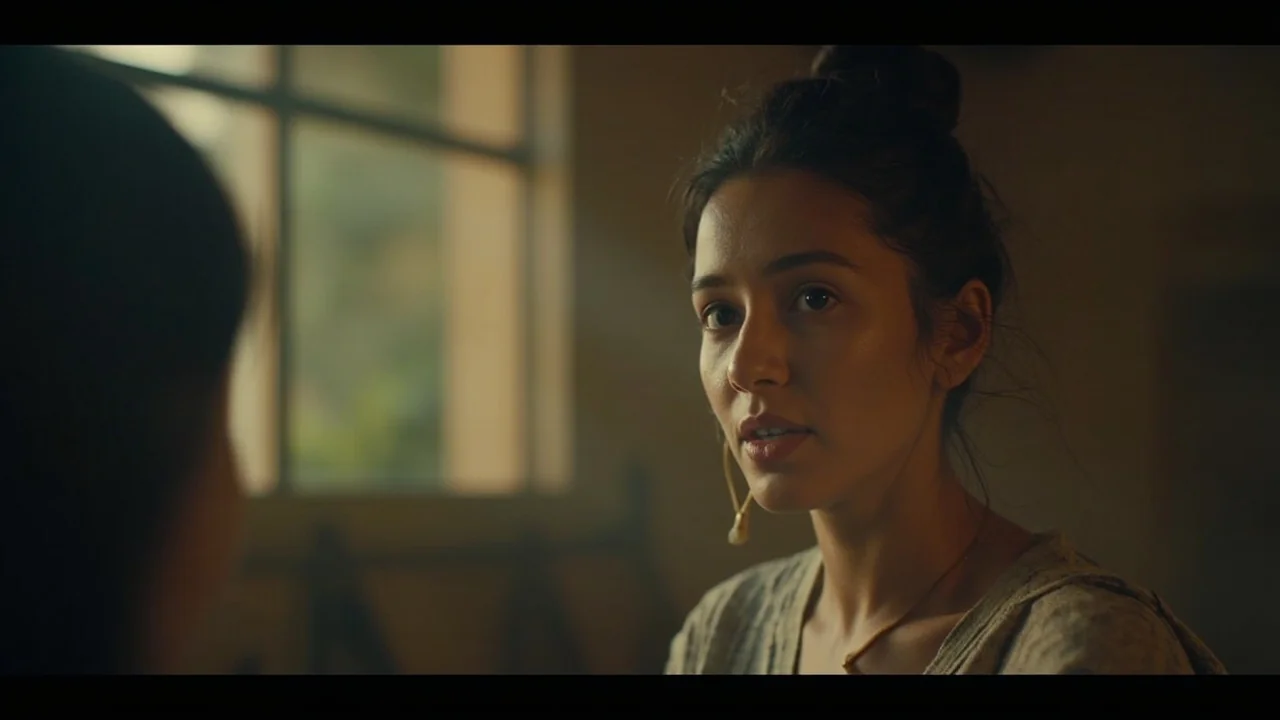
Kling 3.0 for Dubai production houses: how multi-shot storyboards cut a 30-second ad from AED 92K to AED 4,200
A 30-second commercial does not need two shoot days, eight actors, six locations and a convoy of production vehicles to look premium. For a Dubai brand campaign, the expensive part is often not the final edit. It is moving cameras, crews, props and clients between locations, then paying for every extra hour because the visuals fall slightly outside the original storyboard.
A recent JJ Agency Films concept for a 30-second retail campaign tested a different production model: Kling 3.0 generated a connected sequence of shots from a structured multi-shot storyboard. The working budget came to AED 4,200, compared with AED 92,000 for the equivalent live-action production plan. The number is a controlled production estimate, not a universal price for AI advertising. Its value comes from replacing many costly production days with one planning session, a small number of generated shot sequences and focused post-production.
For production houses in DIFC, Business Bay and Al Quoz, this approach offers clients more visual possibilities without turning every campaign into a location-heavy shoot. It suits product films, fashion concepts, automotive ads, hospitality promos and social-first brand content. It changes where sound design, editing, typography, colour grading and brand judgement enter the workflow.
Where the AED 92,000 usually goes
The AED 92,000 live-action estimate covered a director, cinematographer, focus puller, gaffer, art department, production manager, two talent days, a stylist, camera and lighting rental, a sound recordist, props, permits, insurance, catering and transport. The commercial featured interiors in Downtown Dubai, a retail appearance at Dubai Mall and an exterior transition around JBR. Every additional setup added crew time before it added screen time.
AI-generated production removes several layers of that cost. There is no camera crew waiting on a locked-off frame, no lighting truck between locations and no repeated reset for a five-second insert. The revised budget allocated AED 1,800 for Kling generation and shot development, AED 600 for licensed audio and music, AED 500 for colour finishing, and AED 400 for final editing and delivery. The remaining AED 900 covered art direction, prompt design, storyboard development, voice recording, client revisions and project management.
The biggest saving was fewer dependencies. In the live-action plan, one delayed location could affect camera, talent, lighting, transport and edit schedule. With Kling 3.0, a problematic shot can be revised from a prompt and reference image while the rest of the timeline stays stable.
This should not be confused with using AI as an automatic replacement for a production company. Creative direction remains the expensive decision: teams still define the brand, choose the right imagery, protect continuity and decide which generated frames deserve screen time. JJ Agency Films describes this model in its broader video production services overview and in its AI content production services page, which covers the generation, localisation and post-production stack a Kling 3.0 shot sits inside.
How a Kling 3.0 multi-shot storyboard changes the workflow
A standard AI prompt asks for one clip. That can work for a mood film, but it is a weak brief for a commercial with a beginning, middle and product reveal. A multi-shot storyboard works differently, building on the previsualisation logic covered in AI storyboarding for Dubai videos. The team defines six to eight shots before generation, with the same character, wardrobe, product, location, lighting direction and camera language attached to every scene.
For the test campaign, shot one established a close-up of a watch movement. Shot two introduced the wrist and cuff against a dark stone surface. Shot three moved to a wider composition near a window. Shot four showed the product rotating into a branded end frame. Each prompt included a subject, action, lens perspective, movement and continuity reference. Kling 3.0 then generated candidate sequences within a consistent visual direction, a multi-shot capability covered in Variety’s artificial intelligence desk.
The storyboard prevented “beautiful but unusable” footage. The agency could reject a distracting reflection before spending time on a full 30-second edit. It also gave the client something concrete to approve: stakeholders reviewed frames that already communicated pacing, product scale and tone.
For teams considering a wider production stack, the practical comparison in pure generation versus a hybrid shoot for a 30-second product ad is useful. Different models can still handle selected inserts or clean backgrounds. The model choice should follow the shot, rather than forcing every shot into one tool.
Dubai production houses already understand this modular approach. The same principle appears in virtual production with LED volumes in Dubai, where environments are planned and rendered before the camera day. AI storyboarding is cheaper and more flexible, but it shares the discipline of technical previsualisation.
Why the brief matters in Dubai’s competitive campaigns
Dubai campaigns often need several visual settings in a short duration: a Jumeirah resort, a Downtown property, a Business Bay office and a Marina skyline. A fast-moving consumer audience will not wait while the film slowly introduces each location. Multi-shot generation compresses that geography while preserving a deliberate sequence.
That matters for RERA-regulated property marketing, where a luxury tower in Downtown, a JBR apartment and a Marina penthouse may need distinct environments within one advert. It also suits campaigns near Expo City, Museum of the Future and Burj Khalifa views. The aim is a credible visual journey at a controlled budget.
Local context is equally important. Media City Free Zone, Dubai Media City, Studio City and Sharjah Media City contain agencies, post houses and brands that need fast-turnaround content in different languages and aspect ratios. A structured storyboard can be adapted into 16:9, 9:16 and 1:1 cuts while preserving the main narrative, so the same shot plan serves broadcast, outdoor screens and paid social.
What still requires human production expertise
Kling 3.0 can make the imagery faster, but it cannot make vague briefs precise. The first test storyboard struggled with a particular brand colour and an over-polished watch surface. Fixing those details required a human art director, product reference images and tighter prompts. Generated footage was also unsuitable for hands handling the watch, so that moment was replaced with a macro product shot rather than hidden behind imperfect motion.
Typography was created conventionally during post-production. The brand end frame required exact Arabic and English lettering, controlled spacing and a legally usable logo, and the audio was recorded with a human voice because cadence carried more authority than synthetic speech.
Some campaigns still need real cameras. Human behaviour, exact product mechanics and premium automotive reflections can demand on-location filming. In those cases, AI can handle supporting cutaways or social extensions while a compact live-action unit shoots the hero material. The options are also explained through the studio’s guide to 3D animation for Dubai businesses.
When the AED 4,200 model makes commercial sense
The multi-shot approach fits a campaign with a clear visual system, a product describable through reference images, and a story that does not depend on continuous live-action performance. It is useful for concept testing, paid social, regional adaptations, hospitality packages, retail launches and e-commerce campaigns, where one hero film can support many short variations without commissioning a new shoot each time.
It is less suitable when a client requires documentary-style interviews, a precise physical performance, complex choreography or verifiable footage of a real venue. A venue can still be represented convincingly, but a location visit may be needed for authentic reflections and operational details.
The strongest proposal for a Dubai brand is a tiered plan, not “AI instead of production”. The multi-shot storyboard covers the high-volume 30-second master and its variants. Selective live-action or higher-end CG footage covers moments that need physical authenticity. That hybrid can reduce the initial production budget from AED 92,000 to AED 4,200 while protecting the details viewers notice.
The saving is achieved through previsualisation, fewer locations and controlled iteration. For agencies in DIFC, JBR and Al Quoz, that is a commercially meaningful advantage: faster approvals, clearer budgets and a finished campaign that can move beyond one screen and one audience.