FLUX 3 Video for Dubai marketers: the new AED 1.06 per second economics
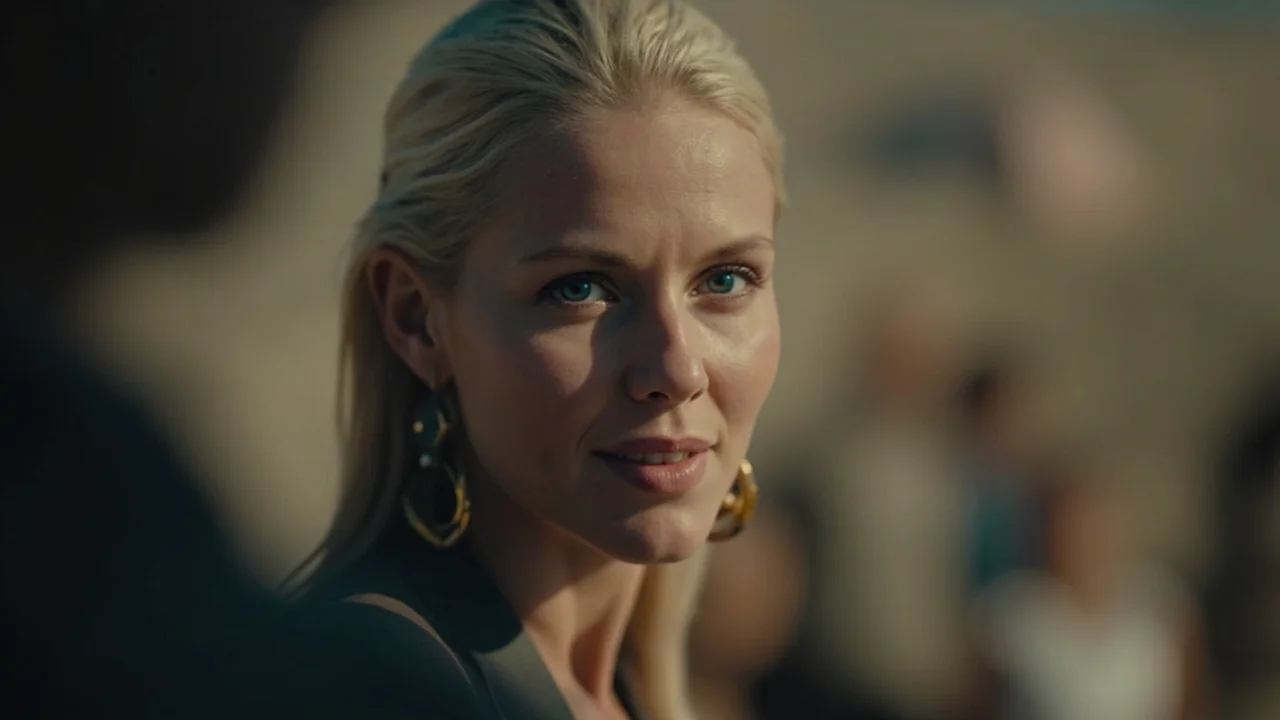
FLUX 3 Video is giving Dubai production teams a fresh cost option for short-form AI video. Black Forest Labs’ open-weight approach can reduce the model-generation cost of a 20-second clip to approximately AED 21.20, or AED 1.06 per second, before creative development, post-production, and delivery.
That figure matters to agencies, brand marketers, and production houses working across DIFC, Business Bay, JBR, Downtown, and Dubai Marina. A 20-second product film, social ad, or location concept no longer needs to justify a premium generation budget before the first frame is approved. It also gives teams in Studio City, Dubai Media City, Sharjah Media City, and the Media City Free Zone more room to test concepts and client variations.
The most useful distinction is not simply “AI versus live action.” It is how FLUX 3 Video changes the planning conversation around AI video production Dubai teams can build around.
Why the AED 1.06 per second figure changes production planning
A traditional commercial budget can absorb several shooting days, location fees, casting, crew, equipment, revisions, and post-production. FLUX 3 Video does not remove those costs from live-action work. It creates a cheaper intermediate layer for motion studies, campaign concepts, product visualisation, social cutdowns, and previsualisation.
At AED 21.20 for a 20-second generation, a team can produce multiple versions of a visual direction without treating every experiment as a major production commitment. For a Dubai real estate brand showing a Downtown apartment, the generation cost can sit alongside CGI and architectural visualisation rather than replace them. For a hospitality campaign filmed around the Burj Khalifa, teams can test weather, lighting, camera movement, and guest journeys before committing to a physical shoot.
The calculation also supports tighter agency estimating. A 10-second reel would cost around AED 10.60, a 30-second sequence around AED 31.80, and a 60-second master around AED 63.60. These figures are useful planning baselines, not final campaign quotes. Brand teams still need to account for storyboarding, sound design, colour finishing, motion graphics, captions, licensing review, and delivery specifications.
What Black Forest Labs’ open-weight approach means for production teams
Open-weight models give production teams more control over the environment in which video is generated. Depending on hardware and deployment choices, a studio can operate a controlled workflow, protect unreleased campaign concepts, and avoid relying entirely on a closed web interface. That can matter for brands producing property campaigns near DIFC or product launches connected to Expo City.
For Dubai agencies, this creates a practical middle path between a public browser tool and a fully bespoke studio pipeline. The model can be used for controlled concept generation, while human specialists handle art direction, editing, sound, and final delivery. The broader direction of generative media is covered by Variety’s artificial intelligence coverage, including the business and creative debate around AI video.
Open weight should not be confused with “one click and finished.” The strongest results still depend on a precise prompt structure, reference images, sensible camera instructions, and an editor who recognises when an artefact needs repair. FLUX 3 Video is most useful as part of a production system, not as a replacement for production judgement.
Where FLUX 3 Video fits in a Dubai campaign workflow
The clearest use cases are short, visually controlled assets where revisions are expensive. These include launch films for a new Jumeirah hotel, retail concepts for brands opening in Deira, animated product stories for e-commerce, and short social cuts derived from a longer campaign concept.
A sensible six-step workflow begins with a real creative brief, followed by reference preparation and storyboard frames. The team then generates controlled variations, selects and repairs the strongest shots, and finishes the edit with sound, graphics, and colour. The final stage is human review against the campaign brief and brand requirements.
For automotive and yacht brands, the cost advantage also makes it easier to compare a generated sequence with a physical or LED-volume production. JJ Agency Films’ guide to virtual production cost in Dubai for luxury car and yacht commercials provides a useful live-action comparison. Another relevant breakdown examines virtual production with LED volumes for product launches.
FLUX 3 Video should not be used to imitate a real person’s identifiable performance without permission, recreate a protected brand asset, or present an invented location as factual footage. It works best when the brief clearly separates mood and concept from documentary evidence.
How FLUX 3 Video compares with other AI video models
Cost is only one part of model selection. Resolution, motion stability, duration, typography, prompt control, and editing compatibility all affect the finished result. A model that generates a beautiful 20-second clip may still be expensive if the usable output rate is low or if every sequence requires extensive repair.
That makes side-by-side testing essential. This comparison of Vidu 2.0 versus PixVerse V5 for Dubai production teams illustrates how different generations, durations, and output resolutions change the commercial decision. FLUX 3 Video’s proposed AED 1.06-per-second economics should be assessed against the usable seconds delivered, not the cost of a failed generation.
A sound evaluation should use the same campaign across each shortlisted model: one luxury hotel sequence, one product close-up, one aerial Dubai environment, and one talking-head format. Reviewers can score continuity, artefact frequency, colour consistency, lip movement, editability, and production time. Only then does the headline rate become meaningful.
Wellshot, the AI film studio built by JJ Agency Films in Dubai, runs FLUX 3 Video alongside other generative models in a browser-based workflow. Its broader model comparison is useful for teams that want one production interface instead of managing separate generation tools.
What a realistic Dubai AI video budget looks like
AED 21.20 represents the 20-second model-generation component, not the price of a finished commercial. A practical campaign estimate should separate the build into several lines: concept and script, reference preparation, generation, editing, sound, motion graphics, colour finishing, localisation, and revisions.
For example, a 20-second property teaser for a DIFC development might allocate AED 21.20 to generation, then add a separately scoped post-production package. A retail launch for a mall in Business Bay may need more time for product accuracy and typography. A tourism film using Museum of the Future, the Burj Khalifa, or Coca-Cola Arena as visual references requires a different level of detail, compositing, and finish than a quick social teaser.
Teams should also budget for versioning. English and Arabic versions, 9:16 and 16:9 formats, multiple product colours, and platform-specific endings can multiply output needs. A cost sheet based on AED 1.06 per second becomes far more useful when each variant is listed from the outset.
Is FLUX 3 Video ready for commercial work in 2026?
Yes, for the right projects. FLUX 3 Video is a credible option for Dubai marketers who need fast concept development, controlled short-form sequences, or affordable variations of an established visual direction. Its open-weight model and approximately AED 1.06-per-second generation cost offer a clear advantage for teams that know what they want and can judge the output accurately.
It is less convincing as a one-stop replacement for filmed storytelling. Live action remains the stronger choice when a campaign depends on authentic human emotion, real product behaviour, precise location coverage, or trusted documentary evidence. The better question for agencies and brands is not whether AI replaces the camera. It is which part of the camera’s former job can now be completed faster, more cheaply, and with acceptable creative control.
For a 2026 pitch, FLUX 3 Video should appear as a costed production option rather than a speculative technology. Present the AED 21.20 generation figure, define the finishing scope, test one relevant shot, and compare the result with live action and virtual production. That gives clients a rational path from concept to finished asset without hiding the production work behind a per-second headline.