Why a unified AI video subscription is reshaping Dubai editing in 2026
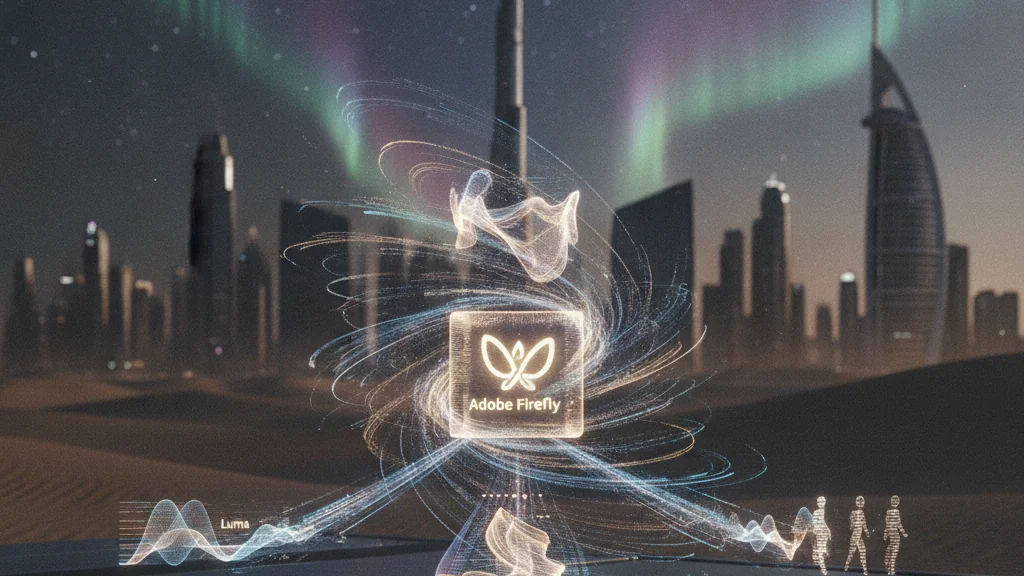
For Dubai's production teams, brand marketers, and agency owners, 2026 is shaping up to be a watershed year for AI video. The fragmented world of AI video models, with each offering specific strengths but demanding separate subscriptions, is slowly converging. The most significant development on this front is Adobe's rumored integration of leading third-party AI video generators like Luma AI, RunwayML's Gen-2, and Marey into a single, unified Firefly Video subscription. This move is poised to simplify workflows and bring advanced capabilities directly into the Adobe ecosystem, a welcome change for busy professionals in DIFC, Business Bay, and Dubai Media City.
The current AI video models challenge for Dubai studios
Today, a typical AI video production Dubai workflow often involves juggling multiple platforms. A creative director in Al Quoz might use Runway Gen-2 for initial creative exploration and rapid prototyping of a luxury automotive ad for Dubai Studio City, costing around $76/month for a Pro plan. Then, they might switch to Luma AI's Dream Machine for more photorealistic renders of architectural fly-throughs for a Dubai Marina off-plan real estate project, potentially at $49/month. For specific tasks like upscaling and de-noising, Topaz Video AI is a go-to, another separate license. And for AI-generated voiceovers in Arabic for an Abu Dhabi luxury hospitality campaign, ElevenLabs offers impressive fidelity, with subscriptions ranging from $5 to $330/month, or enterprise pricing for their advanced Arabic v3 model. This multi-tool approach, while powerful, adds complexity and subscription overhead that many Dubai SMEs, like boutique agencies in Jumeirah, find challenging to manage. A unified Adobe Firefly Video subscription, integrating these tools, would streamline this significantly, allowing teams to focus more on creative direction and less on software logistics.
Firefly Video as the central hub: what to expect
Adobe's strategy with Firefly Video is to act as the central nervous system for AI-driven video creation. By integrating models like Luma AI, known for its photorealistic output and rapid generation, and Runway Gen-2, celebrated for its creative control and diverse styles, Adobe aims to offer a comprehensive toolkit. Marey, a lesser-known but powerful AI tool, could bring specialized capabilities like advanced motion tracking, temporal consistency, or unique stylistic transfers that differentiate Firefly from other offerings. Imagine a brand marketer in Downtown Dubai needing to quickly generate several variants of a corporate explainer video for a DIFC fintech client. Instead of rendering a base sequence in one AI model, exporting it, importing into another for a specific effect, and then back to Premiere Pro for editing, Firefly Video would allow these operations within a single interface, much like the end-to-end Runway workflow we've covered for Dubai editors. This could drastically cut down on production time, making AI-generated content more accessible and efficient for projects across the UAE, from Expo City installations to virtual staging for RERA-compliant property listings.
Impact on Dubai's production pipelines: AI video models in one subscription
The integration of leading AI video models into Adobe Firefly Video will profoundly impact production pipelines in Dubai. In pre-production, AI-assisted storyboarding and script generation, already present in tools like DaVinci Neural Engine, will become more reliable with access to varied visual styles from Luma and Runway. For example, a production house in Deira could rapidly visualize a dozen different stylistic approaches for a new tourism campaign without committing to expensive traditional concept art. During production, while traditional shooting remains crucial for high-end projects (like a 3-day Dubai studio shoot costing AED 35-60K), AI-generated B-roll, virtual sets, and even AI-assisted character animation from tools like Pika or Meta Muse Video will become more sophisticated and easier to integrate into live-action footage. This is particularly relevant for virtual production studios in Dubai Studio City and the wider UAE production hub cluster, and complements the workflow we detailed in our Runway Aleph 2.0 auto-editing coverage for post houses. Post-production will see the biggest gains: AI upscaling to 8K, advanced color grading suggestions, AI-powered VFX (like those offered by CGI & VFX production services), and hyper-realistic AI voiceovers in various languages, including localized Arabic dialects via ElevenLabs, will be available directly within the Adobe suite. This means quicker turnaround times for deliverables, from social media content for JBR retailers to full-length brand films for luxury clients.
Cost efficiency and creative freedom for Dubai businesses
The promise of a single Firefly Video subscription for multiple AI models is not just about convenience; it's about cost efficiency and expanding creative possibilities. Instead of paying for Sora Pro ($200/month for advanced features), Runway Gen-2 ($76/month), and Luma AI ($49/month) separately, a unified Adobe Creative Cloud subscription that includes Firefly Video with these integrations could represent significant savings for Dubai businesses. For a production agency, this means more budget allocated to creative talent and less to software licenses. It also fosters greater creative freedom. With a wider array of AI models at their fingertips within a familiar environment, editors can experiment more, generating multiple versions of a scene or sequence with different aesthetic qualities, AI-generated music, or motion graphics design. This rapid iteration process is invaluable for client pitches and ensuring brand alignment, especially for high-stakes campaigns in the competitive UAE market. While AI tools still have limitations, including complex license rights, resolution limits, and brand-safety reviews that are essential to avoid model collapse or hallucinated content, the ease of access will empower a new wave of creativity.
The future of AI video production in the UAE
As 2026 approaches, the integration of leading AI video models into Adobe Firefly Video will solidify Adobe's position as a dominant force in the AI video production landscape. For Dubai's dynamic media sector, this means a powerful, streamlined toolkit that can meet the demands of fast-paced projects, from corporate explainers for hospitality and retail clients to high-impact brand activations at the Burj Khalifa or Coca-Cola Arena. While local AI video production studios like Krea AI and Synthesia continue to innovate, Adobe's move provides a centralized platform that many established production houses and marketing agencies in the UAE will likely gravitate towards. This evolution will not replace human creativity but augment it, allowing Dubai's creative professionals to push boundaries and deliver exceptional video content with unprecedented efficiency. Video production services will adapt, with a greater emphasis on AI prompting, oversight, and the unique human touch that still defines compelling storytelling. For more insights into how AI is shaping the industry, Forbes offers a look at AI's impact on video production.