What AI Video Dubai luxury hotels are spending in 2026
Dubai's luxury hospitality sector is constantly seeking new ways to capture a global audience. For properties like Atlantis The Palm, Burj Al Arab, and Bvlgari Resort Dubai, visually strong hero films are paramount. Traditional high-end production, involving extensive crews, location permits in areas like Jumeirah or Downtown, and elaborate post-production, can escalate into budgets of AED 150,000 to AED 500,000 for a single 60-second spot. In 2026, a new wave of AI video tools, particularly Runway and Luma Ray3, is offering a credible alternative, giving Dubai's top hotels a way to cut hero film budgets while holding the visual bar.
The shift is not only cost savings. It is about agility. Imagine generating multiple versions of a luxury suite walkthrough or a beachside dining experience in a fraction of the time a traditional set-up would need. That flexibility is what makes the difference for brand marketers and production teams working out of Dubai Media City and Studio City, who can test ten treatments before committing to one. For a deeper dive on how models stack up, the comparison of vidu 2.0 vs pixverse v5 is worth reading.
Why Runway Gen-4.5 gives Dubai luxury brands an edge
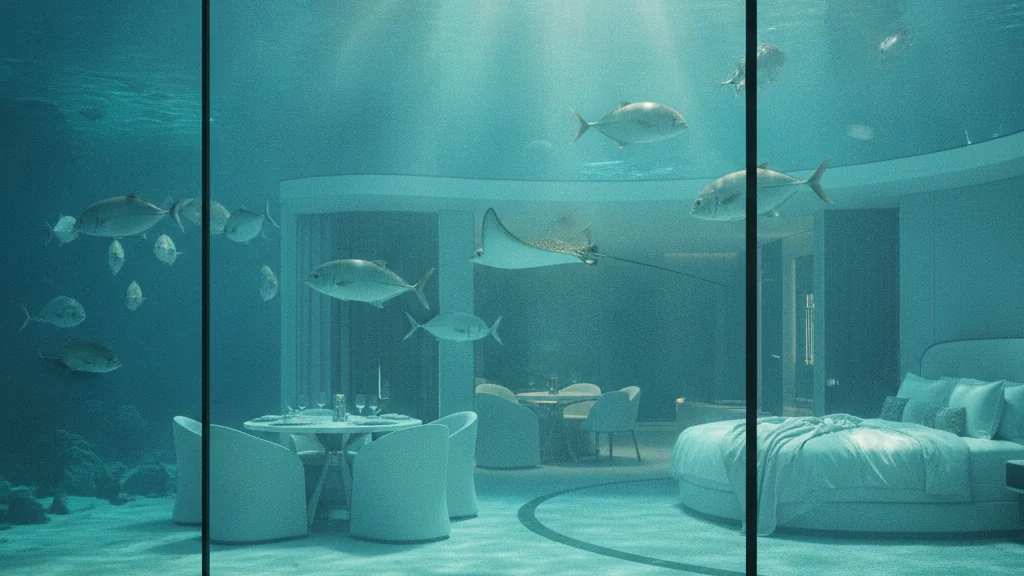
Runway Gen-4.5, with its text-to-video and image-to-video generation, is proving to be a powerful asset for luxury hotels. For Atlantis The Palm, known for its expansive aquariums and waterparks, Runway can generate underwater sequences or scenes of guests interacting with marine life without complex underwater rigging or extensive CGI crews. The workflow is simple: input a prompt such as "a couple enjoying a sunset dinner at a private beach villa, with the Burj Al Arab subtly in the background, soft golden hour lighting", then receive several high-quality outputs. Runway's Max plan at $76 per month covers 9,500 credits, roughly 791 seconds of Gen-4.5 footage, which makes iterative testing affordable against a multi-day Dubai studio shoot running AED 35,000 to AED 60,000. Gen-4 Turbo bills at five credits per second, the cheaper path when a treatment only needs to prove a look.
For Bvlgari Resort Dubai, with its minimalist design and exclusive island feel, Runway can generate sophisticated mood films that show architectural details or serene moments by the infinity pool. The iterative nature of AI lets marketers experiment with visual styles, colour palettes, and camera movements in minutes, refining the concept before committing to a live-action shoot. That pre-visualisation power is reshaping how luxury hotels approach content strategy. Dubai production teams typically use Runway to prototype concepts fast for clients in JBR and Business Bay, and the same speed applies to the ai video production dubai pipeline.
Luma Ray3 gives hotel teams frame-level control
Runway and Luma solve different parts of the same problem. Where Runway is fast for ideation, Luma Ray3 is built for control once a shot has been chosen. The current Ray3.2 release supports multi-keyframe direction with up to 16 keyframes per clip, video-to-video generation of up to 20 seconds at 1080p, and a Reframe tool that changes aspect ratio while preserving the original lighting. For a hotel group running the same hero film across a 16:9 landing page, a 9:16 Story, and a 1:1 feed placement, that reframe step removes a round of reshoots.
The other capability that matters to Dubai hotel teams is output format. Ray3.2 generates natively in 16-bit HDR and exports EXR files that drop straight into Resolve or Nuke. A golden-hour terrace shot generated in HDR can be graded against a live-action plate from a real Burj Al Arab location without the colour shift that usually forces a re-render. For Bvlgari Resort Dubai, whose island property trades on dark glass and reflected water, how highlights hold up is the difference between a clip that reads as footage and one that reads as a render.
Cost control is what most teams feel first. Luma prices by the second rather than the month: a five-second 1080p text-to-video generation starts at $1.20, a ten-second video-to-video pass runs to $4.32, and reframe work is billed at $0.36 per second. That makes it easy to price a hero film treatment line by line instead of committing to a subscription before anyone knows how many takes the client wants.
The tradeoff worth understanding is that Ray3 is a generation model, not a capture system. It produces finished moving images from text, stills, or existing footage. It does not scan a real suite and return a navigable 3D tour. Hotels that need an interactive room walkthrough still need a 3D pipeline built for that job, a different category of spend worth budgeting separately. The comparison of virtual production cost in Dubai in 2026 covers where that budget line sits against LED volume work.
Integrating AI Video Dubai into the hotel content pipeline
The true efficiency gains come from integrating AI tools into the broader content pipeline. Imagine a hotel marketing team that needs a series of short social ads for a new F&B outlet in Deira. Rather than booking a full production shoot, the team can use Runway to generate concept videos from mood boards and script prompts. Those clips can then be finished with AI post-production tools such as Topaz Video AI for upscaling to 8K, or DaVinci Neural Engine for colour grading and noise reduction.
For voiceovers, especially on multilingual campaigns targeting the GCC market, ElevenLabs offers highly realistic AI voices in a variety of languages, Arabic included. That can cut studio time and voice actor fees dramatically, and professional talent in Dubai typically bills AED 500 to AED 5,000 per hour. This lets Dubai brands produce localised content at speed, whether it is an explainer video for a DIFC fintech or a promotional spot for a retail launch at Expo City. The post on wan 2.5 vs veo 3.1 for arabic video ads covers that side in more depth.
The future of hero films: balancing AI with human creativity
AI video tools are not replacing human creativity; they are extending it. A skilled creative director, cinematographer, and editor remain essential for defining the vision, guiding the AI, and finessing the final output. Models like Runway and Luma Ray3 act as capable co-pilots, handling the labour-intensive parts of generation and iteration, freeing human talent to concentrate on storytelling and artistic direction. The result is a hero film that keeps its luxury aesthetic while being produced with far greater speed and lower cost. That blend of AI output and human craft is where high-end UAE video content is heading.
The rapid advancements in AI video, frequently reported by industry publications such as variety, indicate that the technology will keep getting more capable. Dubai luxury hotels that adopt these tools early will gain a real competitive edge in a booking market that rewards fresh, high-quality visuals. As Google expands its free AI video tiers, covered in the veo 3.1 lite goes free breakdown, accessibility will keep widening until good enough video is within reach of any in-house marketing team.